What Are Pichwais? | Traditional Indian Art Behind Shrinathji
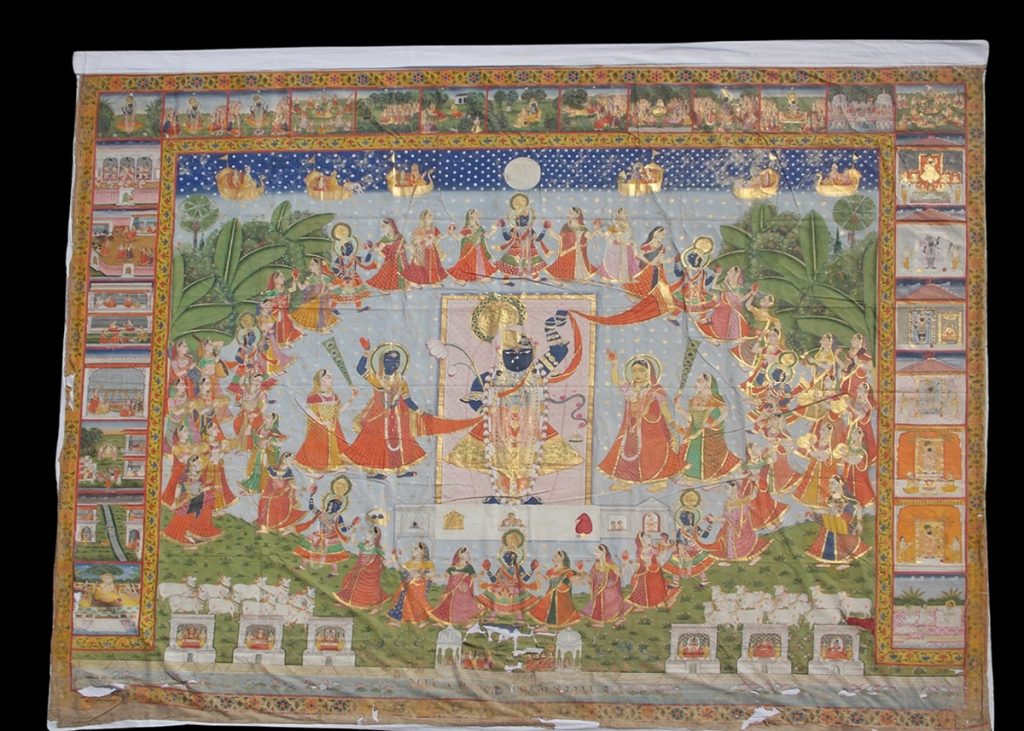
Pichwais (also spelled Pichvais) are intricate, hand-painted cloth paintings that traditionally hang behind the idol of Shrinathji, a revered form of Lord Krishna, in the temple town of Nathdwara, Rajasthan. The term “Pichwai” comes from Sanskrit — ‘pich’ meaning ‘back’ and ‘wai’ meaning ‘to hang’.
These detailed artworks are not just visual treats — they are deeply rooted in devotion, storytelling, and Indian cultural heritage. Pichwais are used in temples and homes to narrate stories from Krishna’s life, mark seasonal festivals, and create a sacred atmosphere.
Origin of Pichwai Paintings – Nathdwara, 17th Century
The history of Pichwais dates back to the 17th century, when the idol of Shrinathji was moved from Mathura to Nathdwara to protect it during Mughal invasions. As the Pushtimarg sect — founded by Vallabhacharya — flourished in Nathdwara, so did the practice of creating Pichwai paintings to honor the deity.
Each Pichwai was custom-made to suit the ritual calendar of the temple — changing with the seasons, festivals, and times of day.
Pichwai Themes and Religious Symbolism
Traditional Pichwais are rich in symbolism and spiritual narratives. Common Pichwai themes include:
- Govardhan Leela – Krishna lifting the mountain
- Raas Leela – The divine dance of Krishna with the Gopis
- Janmashtami – Celebration of Krishna’s birth
- Annakut and Sharad Purnima
- Seasonal depictions of Krishna in different attire and moods
Motifs such as lotus flowers, cows, peacocks, trees, and temple architecture are frequently used to recreate the divine setting of Vrindavan.
Craftsmanship: How Pichwais Are Made
Traditional Pichwai paintings are created by skilled artisans on cotton or silk fabric, using:
- Natural pigments and mineral dyes
- Gold leaf work for embellishment
- Fine brushwork to create intricate detailing
- Manual hand-stretching on wooden frames
A large Pichwai can take weeks or even months to complete, involving multiple artisans, each specializing in different elements like figures, backgrounds, and borders.
Decline and Modern Revival of Pichwai Art
In the 20th century, Pichwais declined due to the rise of printed posters and modern decor trends. But recent years have seen a revival of Pichwai art thanks to the efforts of art collectors, cultural institutions, and interior designers who recognize its aesthetic and historical value.
Today, contemporary artists are reinterpreting traditional Pichwais for modern homes and galleries while preserving their devotional roots.
Why Collect Pichwais Today? | Tanks Antiques Perspective
Owning a Pichwai is not just about having a piece of art — it’s about owning a piece of India’s spiritual and artistic legacy. Pichwais bring:
- Sacredness and serenity to your space
- Aesthetic value through traditional Indian motifs
- A rich storytelling tradition that blends art and devotion
At Tanks Antiques, we curate authentic Pichwais from across India, specializing in antique temple pieces and rare traditional artworks.
Explore Authentic Pichwais at Tanks Antiques
Looking to buy authentic Pichwai paintings online or in-store? At Tanks Antiques, we offer a handpicked collection of original Pichwais, perfect for collectors, interior designers, and heritage enthusiasts.